Growing Up Desi
The Day the Tiffin Came Back Full
A full steel tiffin, birthday poori, cold daal-chawal, and the small piece of achaar that changed everything.
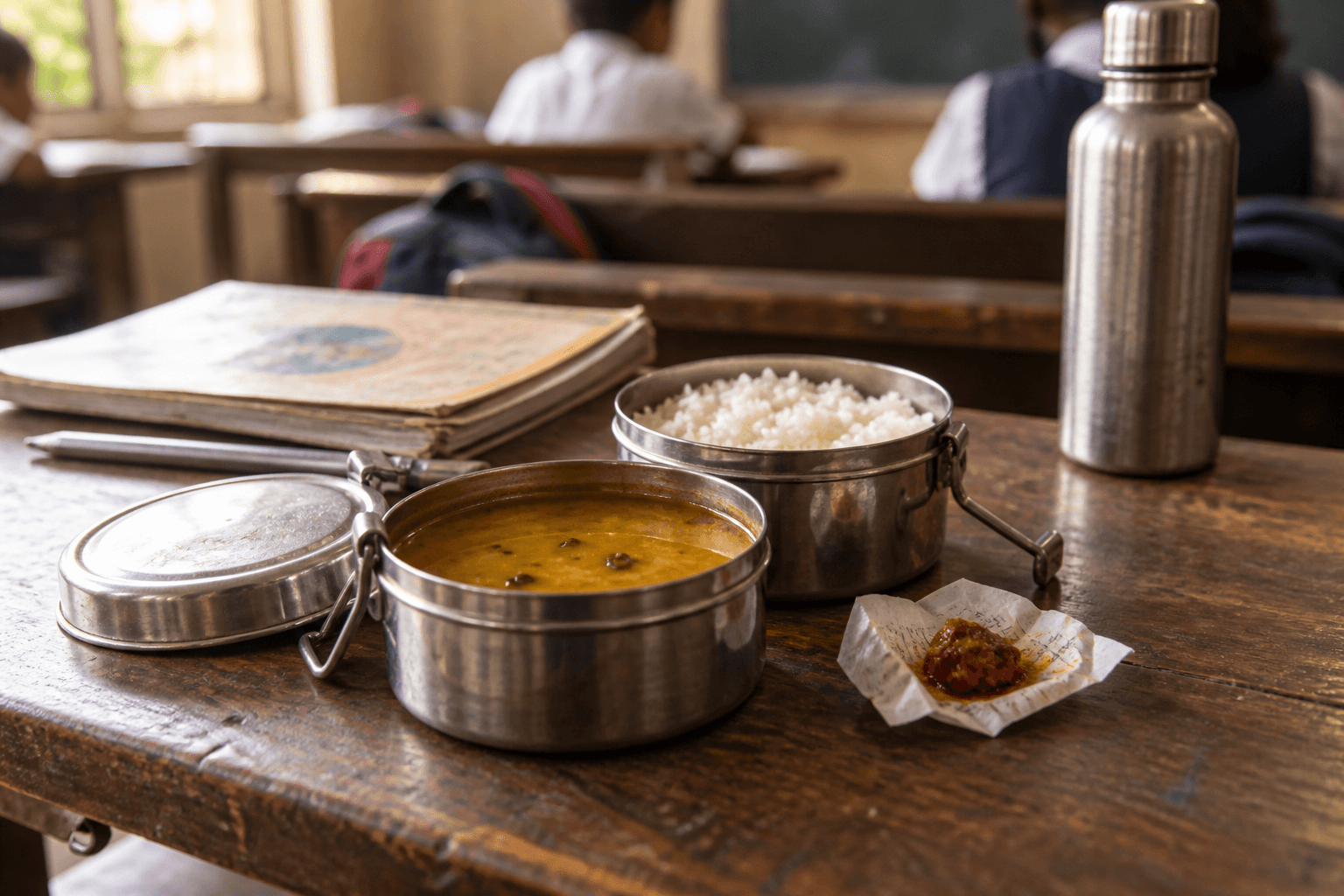
The small steel dabba had two compartments.
One stacked over the other.
That was important, because it made the lunch feel larger than it was.
Daal in one.
Chawal in the other.
By second period, the smell of the daal had already arrived — that specific warm-and-gone-cold smell only packed daal has, different from fresh and different from forgotten.
The chawal had settled into itself.
The whole thing had gone from lunch to responsibility.
It was supposed to be eaten.
That was the agreement.
Morning packing had its own confidence. The lid pressed down. The clips closed. The dabba went into the school bag like the matter was settled.
But school had its own plans.
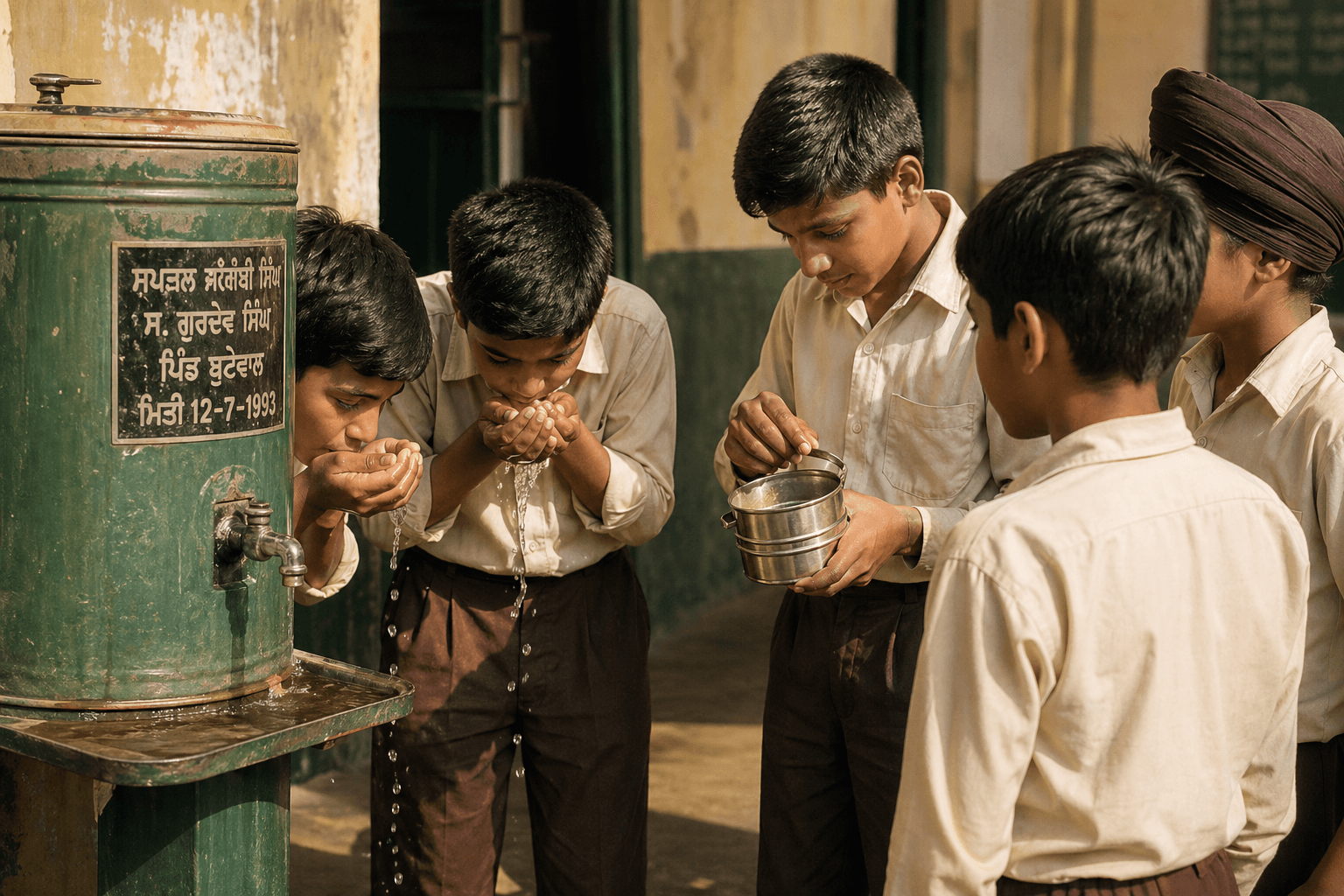
That day, someone had a birthday.
And birthdays changed the rules.
Not completely.
Not officially.
But enough.
There was the usual excitement. The feeling that the day had become slightly less ordinary.
Someone had brought something extra from home — poori folded around aloo sabzi, wrapped tight, still carrying that smell of oil, masala, and birthday generosity even after sitting in a school bag all morning.
He shared it.
That was the problem.
Or maybe that was the blessing.
A piece came my way.
Then another.
Poori with aloo sabzi tasted better when it came from someone else’s tiffin.
It had no duty attached to it.
No expectation.
No mother waiting at home to ask whether it had been finished.
It was just a bite.
Then one more.
By the time recess properly arrived, the daal-chawal was still there.
I opened the dabba once.
Looked at it.
Closed it.
There was no drama.
No rebellion.
No big reason.
Just the quiet childhood logic that says: I already ate something better.
The dabba went back into the bag.
Full.
At home, nothing stayed hidden for long.
A steel tiffin coming back full has a sound.
The lid opens differently.
The spoon has not moved.
The rice still has its morning shape.
The daal sits there, cold and accusing.
Mummy looked at it.
Then at me.
“Khaaya nahi?”
It was not really a question.
I had explanations ready.
Birthday tha.
Usne poori laayi thi.
Aloo sabzi thi.
Sab share kar rahe the.
But explanations do not impress mothers when food has come back untouched.
She was annoyed.
Not shouting-annoyed.
Worse.
The disappointed kind.
“So much food wasted.”
Then the line that came in every desi house eventually:
“Kitne logon ko khaana nahi milta.”
You never knew what to do with that sentence as a child.
You knew it was true.
You also knew you had still eaten the birthday poori.
So you stood there with guilt, the birthday poori still on your conscience, and a full dabba between you.
I promised I would finish it the next day.
The next morning, the same steel dabba came out again.
Daal.
Chawal.
Two compartments.
But this time, something else appeared.
A small piece of achaar.
Not much.
Just enough.
It was wrapped carefully, but achaar does not believe in staying quiet.
By second period, the smell had already escaped.
Sharp.
Oily.
Sour.
A little embarrassing.
Completely irresistible.
I could smell it from inside the bag.
So could my friend.
“Aaj kya hai?”
“Daal-chawal.”
“Phir smell kaisi aa rahi hai?”
“Achaar hai.”
He wanted a piece.
Of course he did.
That was the strange thing about school lunch. The food you felt awkward about was often the food someone else wanted most.
The achaar changed everything.
The daal-chawal was still daal-chawal.
But now it had a reason.
A little rice.
A little daal.
A touch of achaar.
Suddenly the ordinary lunch had become interesting.
Not special.
Not birthday poori.
But enough.
That day, the tiffin did not come back full.
And after that, the achaar became part of the arrangement.
Not every day.
But often enough.
A small piece tucked in.
A smell that announced itself before recess.
A friend waiting for his share.
Mummy probably thought she had solved the problem of wasted food.
She had.
But she had also done something else.
She had not changed the whole lunch.
She had not replaced home food with something exciting.
She had added one small thing that made the same food easier to return to.
That was how many desi homes worked.
Not always with big conversations.
Not always with explanations.
And the next day, somehow, the food went down.
A full tiffin was never silent.
It told on you.
But sometimes, it also told someone exactly what to add.