Rituals & Seasons
Bhaji: The Box That Travelled to the Wedding
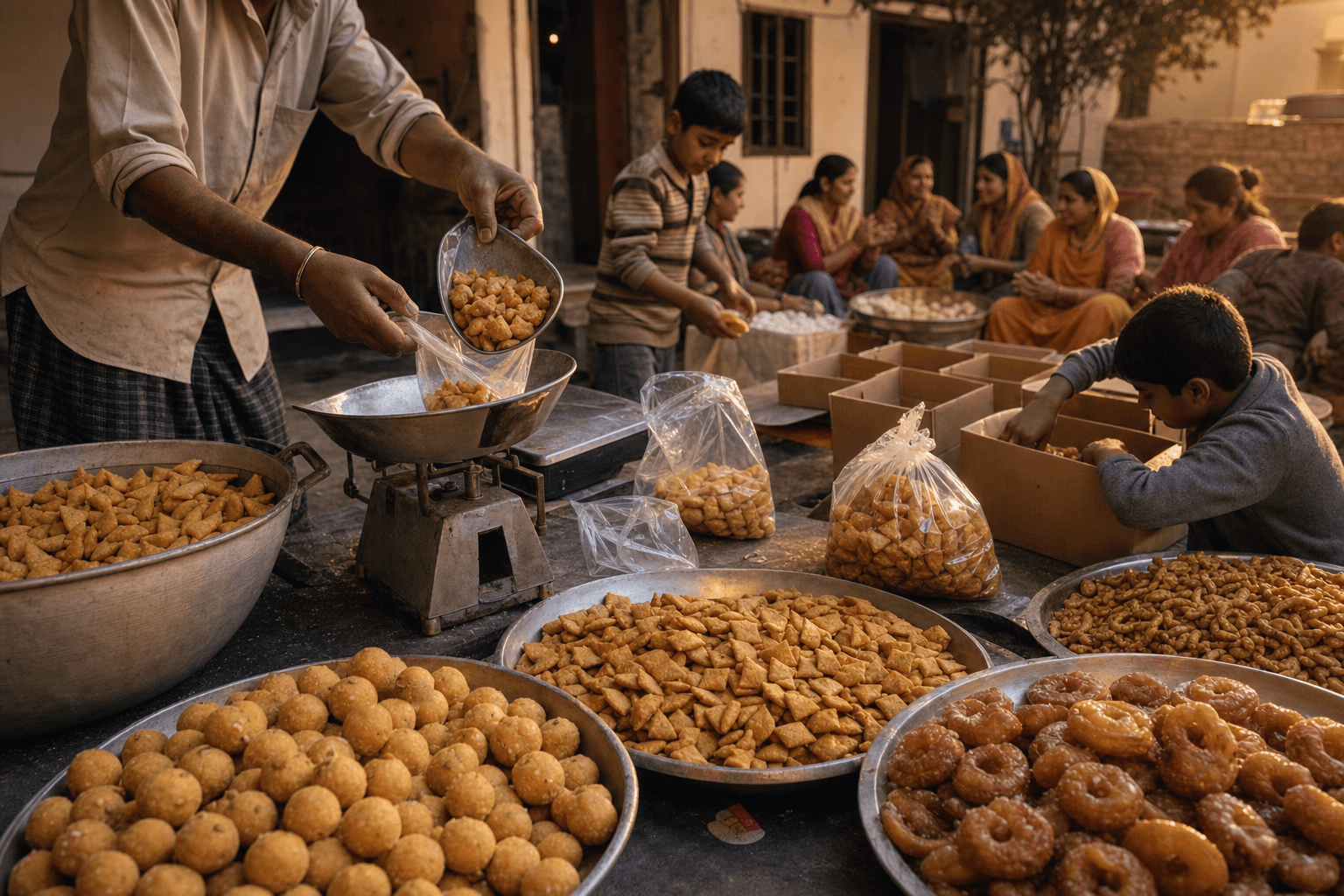
Before the wedding day, the halwai arrived, the courtyard filled with shakarpara, mathi, laddoo, and song - and the whole neighborhood helped pack the celebration.
Three weeks before the wedding, the halwai arrived.
Not to cook the wedding meal. That would come later. He came for something that needed more time - the shakarpara, the mathi, the laddoo, the balushahi. The things that had to be made in quantities that a household kitchen couldn't manage. Mounds of them. Hundreds of boxes worth.
In that world, bhaji did not mean sabzi. It meant the wedding box. Sweet, salty, dry, portable - made before the wedding because the wedding had already begun.
He set up in the courtyard or the back room, and the house changed register immediately. The smell of maida frying in deep oil arrived first - a specific warm heaviness that settled into the walls and the clothes and the hair of everyone nearby. Then the syrup - sugar, sometimes fennel, sometimes cardamom freshly pounded. The neighborhood knew. The smell told them.
The children arrived uninvited and were let in anyway.
This was understood. The halwai worked, the women of the house gathered around him, and the neighborhood kids stationed themselves nearby with an alertness that had nothing to do with good manners. The incentive was simple and explicitly acknowledged - help with the packing, eat as much as you want.
Nobody tracked how much was eaten. That was the arrangement.
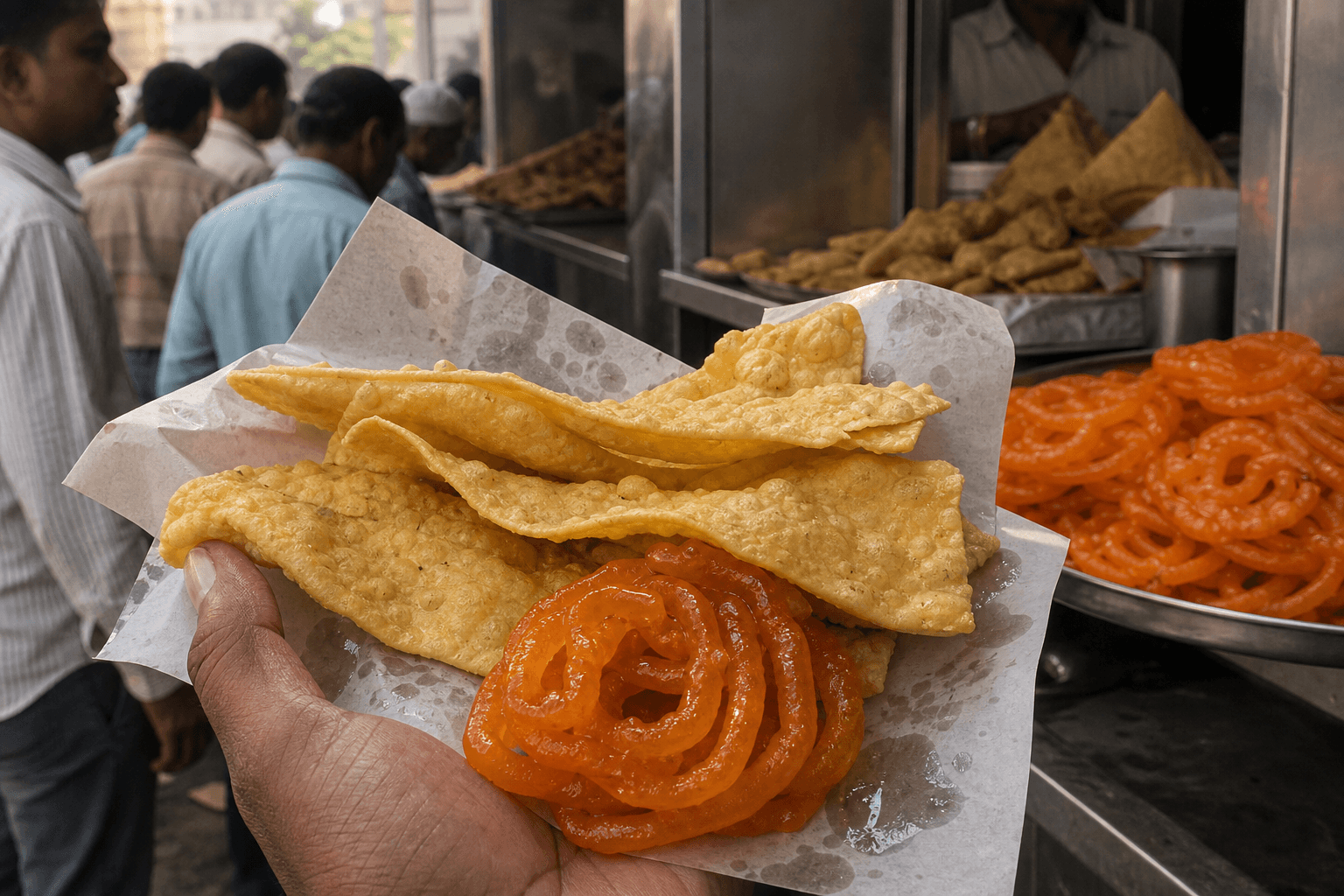
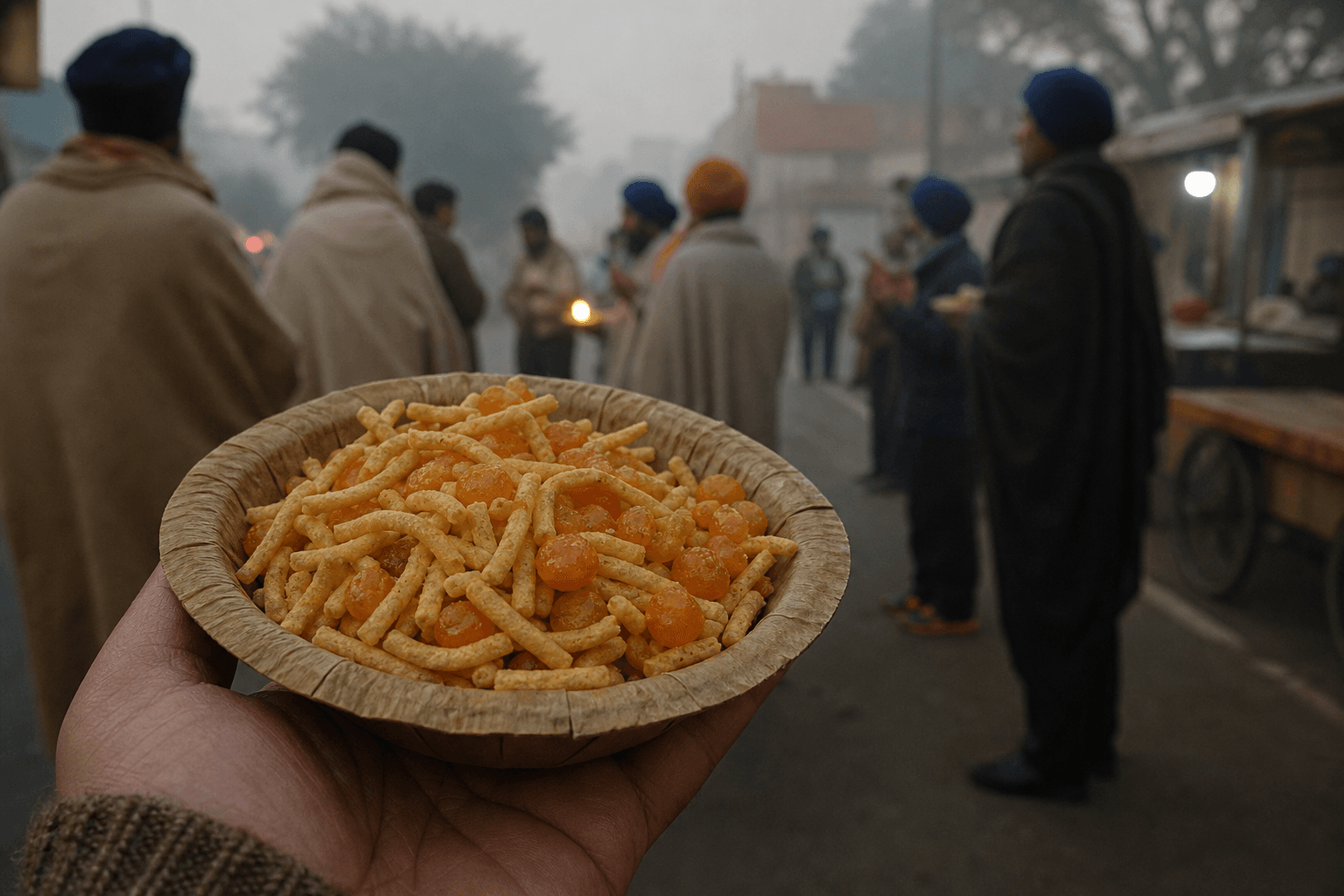
The weighing came first. The halwai or someone trusted with the scale measured out each kilo - shakarpara into one pile, mathi into another. The shakarpara was sweet, crisp, coated and dried. The mathi was salted and flaky, the kind that crumbled when you bit into it. Occasionally a laddoo or a balushahi went in alongside. The combination was not accidental. Sweet and salty, soft and crisp - the box was built to be eaten across hours, across ceremonies, across a day that would be long and loud and full of people who needed something to reach for between meals.
The packing was the job. Plastic bags first, sealed with a twist. Then the 1kg boxes - some with printed labels, some plain - filled carefully and closed. The children helped with varying levels of efficiency and maximum personal gain.
One piece while weighing. One while packing. One more because nobody was looking.
"The box travelled to the wedding. The memory travelled further."
Actually someone was always looking. Nobody said anything.
The evenings had their own atmosphere.
The women sat together and sang. Not performed - sang, the way you do when singing is just what the occasion asks for. Wedding songs, seasonal songs, songs that belonged specifically to the work of preparation and to no other moment. The halwai kept working. The smell kept coming. The boxes accumulated in stacks along the wall.
For a child sitting in that room, the stacks looked infinite. Hundreds of boxes, each one a kilo, each one packed with the same combination - sweetness and salt, the two things a long day needs. The scale kept moving. The songs kept going. The evening light did what evening light does.
This was not the wedding. This was the weeks before the wedding. The weeks that mattered in a different way - quieter, more domestic, belonging to the neighborhood and the courtyard rather than the ceremony and the hall.
The bhaji box had a purpose that only made sense across distance and time.
In the era when weddings lasted several days and families traveled long distances - when wedding travel could take hours, sometimes days - the provisions question was real. A bride's family traveling from one village to another needed food that wouldn't spoil, that could be eaten without preparation, that would sustain people across ceremonies and journeys and the in-between hours when nothing formal was happening but everyone was still there.
The bhaji box was that food.
Shakarpara doesn't need reheating. Mathi doesn't need a plate. Laddoo travels without complaint. The whole box made sense for exactly this - nourishment that asked nothing of the road except to be carried.
The halwai making it three weeks in advance was not impatience. It was the logic of scale. A hundred boxes couldn't be made in a day. The preparation was the ceremony before the ceremony - the household reorganizing itself around the fact of the wedding long before the wedding arrived.
It doesn't really happen this way anymore.
Halwais still exist. Shakarpara still gets made. But the on-site halwai arriving three weeks early, the neighborhood children earning their keep in sugar, the women singing while the boxes piled up - that specific gathering, that specific economy of time and effort and community - has thinned out the way these things thin out. Quietly, without announcement, replaced by orders placed with shops and boxes that arrive pre-packed from somewhere else.
The taste may be close. The atmosphere is not.
Freshly made shakarpara - not warm, just fresh, still carrying the memory of the syrup and the oil - was a specific thing. Anyone who ate it that way knows this. Anyone who sat in a courtyard in Jalandhar in the weeks before a neighbor's wedding, technically helping and mostly eating, knows exactly the difference between that shakarpara and any other.
The box travelled to the wedding.
The memory travelled further.